Workshop “Exploring the digital heritage of reading: multilingualism, automatic detection and annotation”
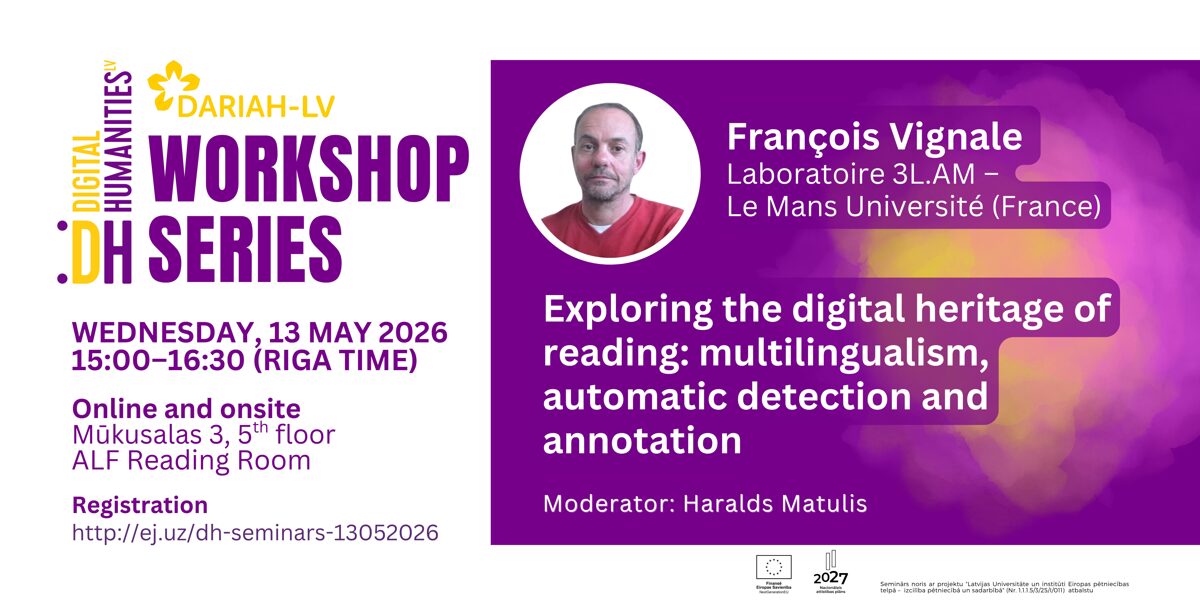
On May 13, the sixth seminar in the series organized by digitalhumanities.lv and DARIAH-LV will take place. The workshop “Exploring the digital heritage of reading: multilingualism, automatic detection and annotation” will be led by visiting researcher Dr. François Vignale from Le Mans University. In his lecture, he will introduce the interdisciplinary project READ-IT, which brings together social sciences, Digital Humanities, and computer science to study reading experiences in Europe across different times and contexts.
April 24 – practical DH seminar “What to do with a table?!”
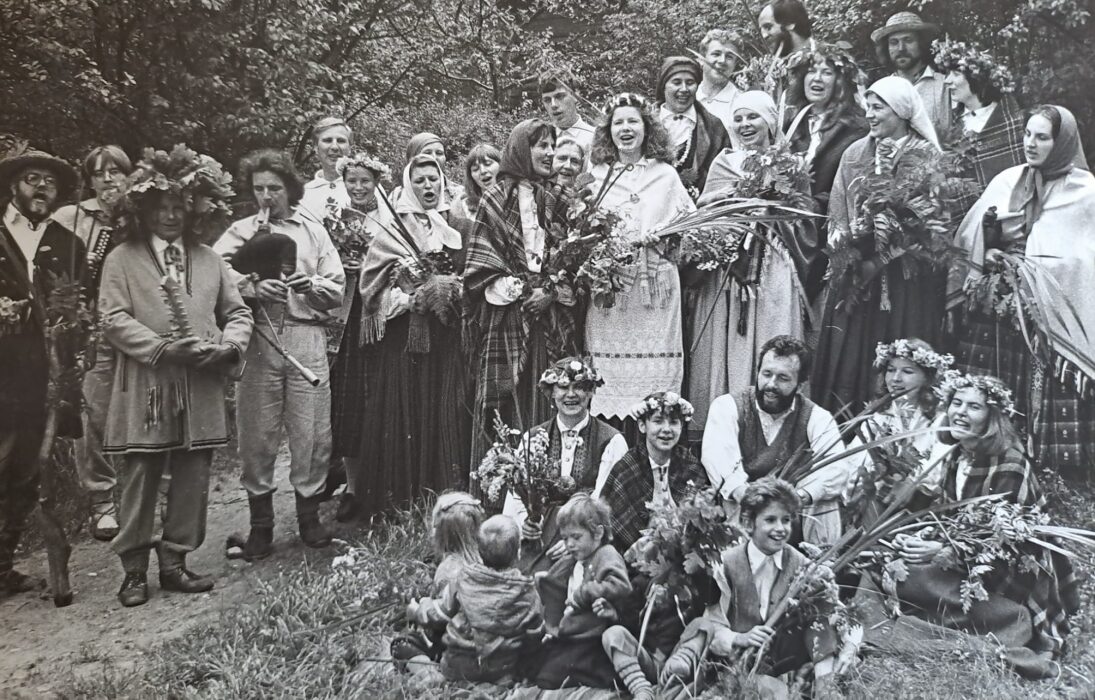
Institute of Literature, Folklore and Art of the University of Latvia (ILFA) Digital Humanities (DH) seminar series continues to develop. This spring, a new thematic strand has been introduced – “Digital tools I use”. The aim of this initiative is to create a space for researchers who use digital methods in their work to share practical experience: to demonstrate their workflows, talk about the tools they use, and openly discuss not only successes but also challenges, mistakes, and solutions. The new format emphasizes the exchange of experience “from practice to practice”.
Citizen Science and Artificial Intelligence in the Preservation of Ukrainian Cultural Heritage
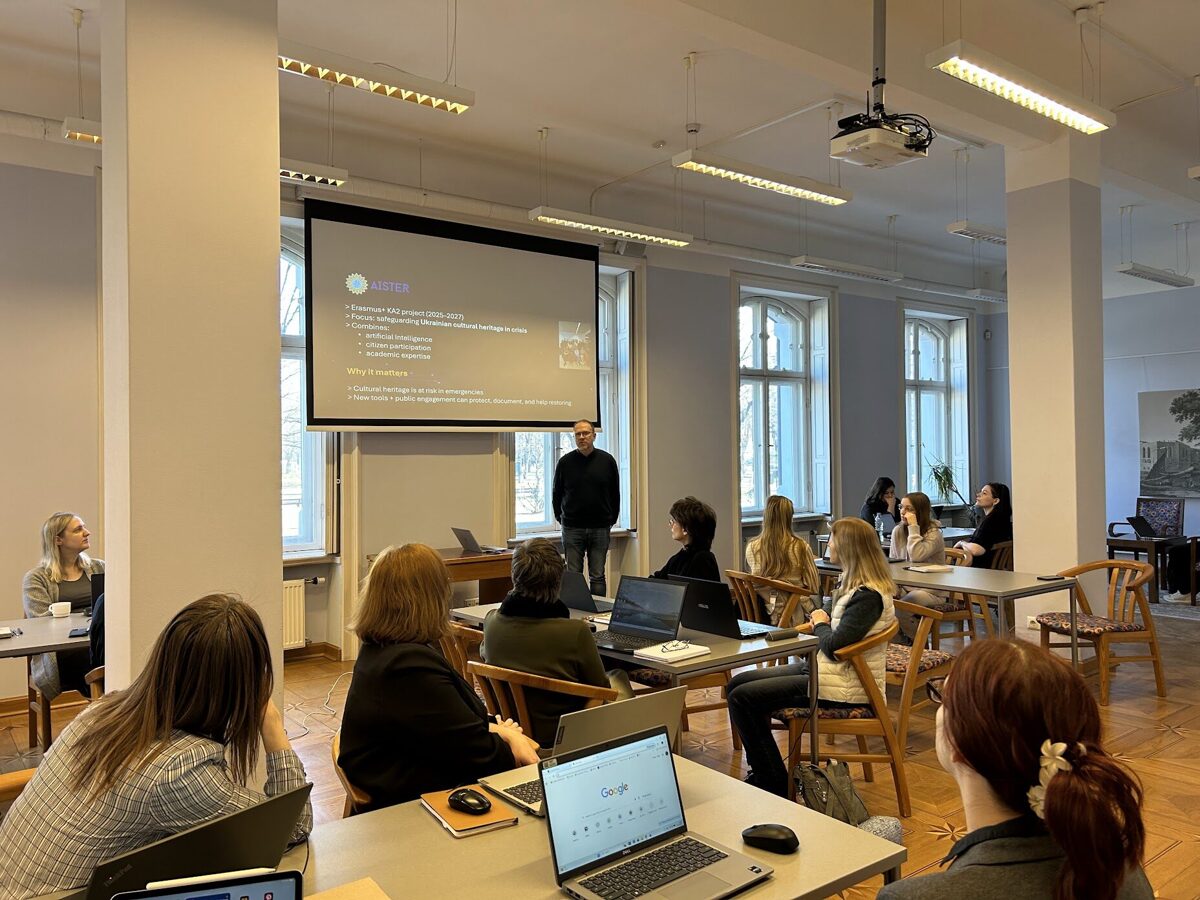
On March 27 and April 4, the
Digital Humanities Center
(DHC) of the Faculty
of Humanities (HZF) and the Library of the University of Latvia
(LUB) organized two Ukrainian cultural heritage data workshops as
citizen science activities within the framework of the AISTER
project. Participants included youth from
the Ukrainian community and their friends from
Young Folks LV,
members of academia, and other
interested individuals. Together, they helped to improve an Artificial Intelligence
(AI) prototype's ability to recognize
elements within images of Ukrainian ethnographic artifacts.
The work took place on Europeana CrowdHeritage, a platform created for crowdsourcing campaigns using metadata from European cultural heritage institutions, utilizing a prototype developed by the AISTER project partner, Web2Learn.