Webinar “Tracing Nazi-Fascist violence to reinterpret World War II history. Deportation and war massacres in Italy between 1943 and 1945 from the archive to digital”
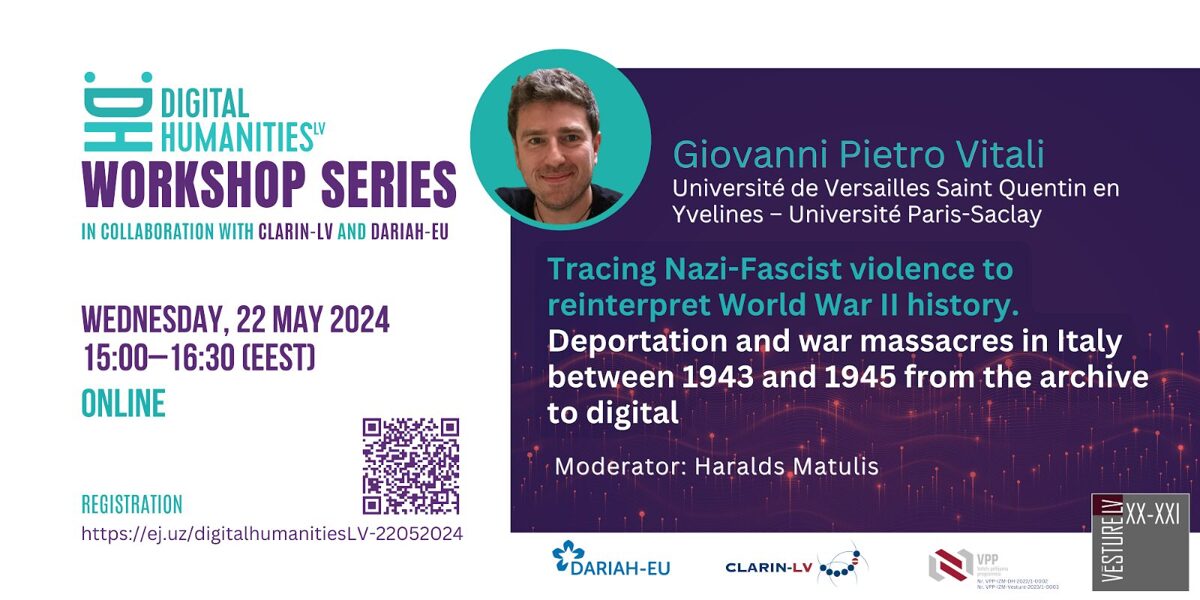
On 22 May at 15.00, the second seminar in
the digitalhumanities.lv series, organised in collaboration with
CLARIN-LV and DARIAH-EU, focusing on digital humanities and
historical research, will take place online. The aim of this
webinar is to reflect on the work of the historian faced with his
sources and the possibilities offered by digital tools. It presents
a 5-year work on archival sources on the violence inflicted on the
civilian population in Italy between 1943 and 1945, carried out
using data visualisation methods. The findings of this research,
carried out with the major institutes of historical memory of the
Second World War in Italy, will be presented but, above all, we
will pose a methodological reflection for all participants, trying
to share how the digital can confirm or question
historiography.
Recap of the Baltic Digital Humanities Forum
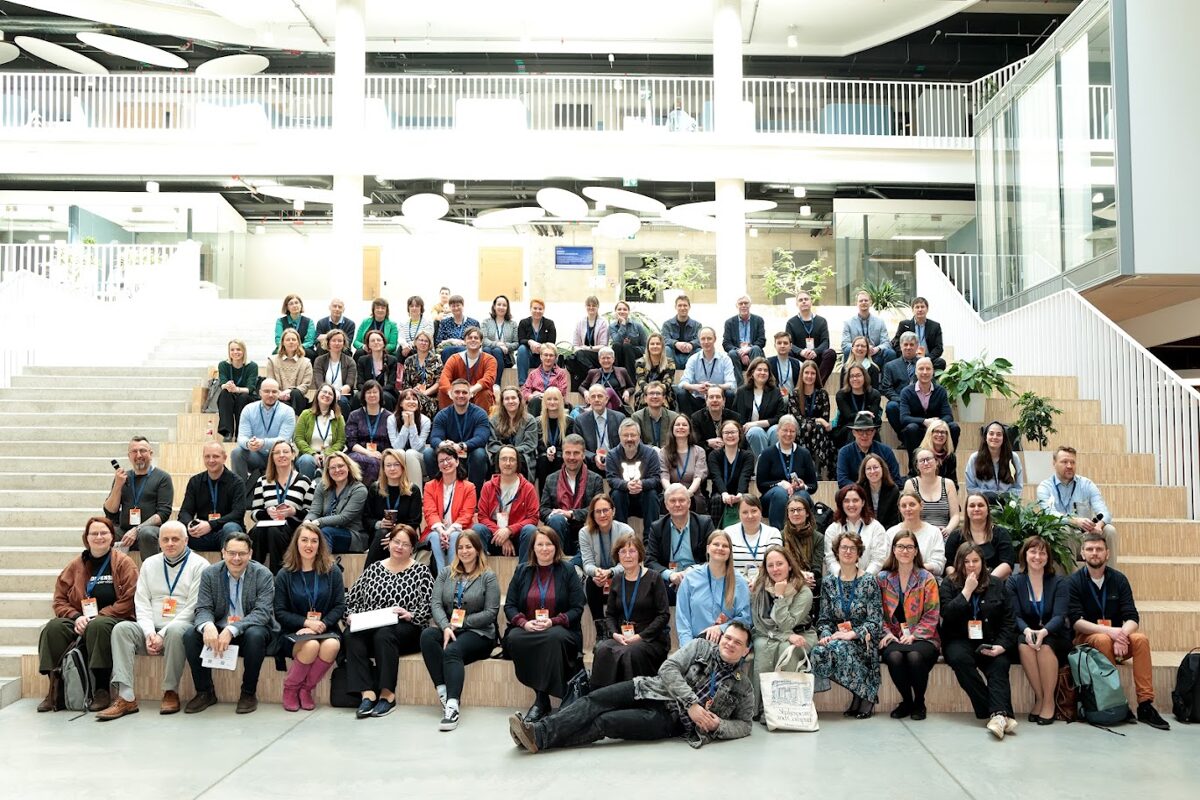
On 25 and 26 April, the first Baltic Digital Humanities Forum took place at the new Academic Centre of the University of Latvia, aiming to create a platform for the presentation and discussion of projects and research, digital tools and resources for Baltic DH researchers, practitioners and those interested. The opening speeches were given by the Latvian Minister of Education and Science Anda Čakša, the Vice-Rector of the University of Latvia Guntars Kitenbergs and the Estonian Ambassador in Latvia Eerik Marmei, highlighting the accomplishments so far and emphasising the importance of digital humanities for the development of the humanities.
The first day of the Baltic DH Forum discussed the current state of the art of the Baltic digital humanities, as well as the role of European research infrastructures in the humanities – CLARIN ERIC and DARIAH-EU. The panel discussion "Shaping Tomorrow: European Research Infrastructures in Humanities and the Role of National Policies" featured Uldis Berķis, expert from the Latvian Ministry of Education and Science, Tadas Juknevičius, Chair of the Science Division of the Lithuanian Ministry of Education, Science and Sport, Sally Chambers, Director of DARIAH-EU, and Krister Lindén from the CLARIN ERIC Board. The impact of research infrastructures on the development of the humanities and the future prospects for this research area were discussed. The following panel discussion "Baltic Digital Humanities Landscape" provided an in-depth insight into the trends in the Baltic digital humanities over the last decades. The first day was concluded with a DARIAH-EU Workshop, moderated by Sally Chambers, Director of DARIAH-EU and Researcher at the Ghent Centre for Digital Humanities.