DIGITAL HUMANITIES IN LATVIA
  • home
  • events
    • Baltic DH Forum
      • Programme
      • Practical info
  • resource library
  • Workshop series
  • videos
  • BSSDH
    • 2026
      • About
      • Programme
      • Lectures and Workshops
      • Venue
      • Registration
      • Gallery
    • 2025
      • About
      • Programme
      • Lectures and Workshops
      • Venue
      • Registration
      • Gallery
    • 2024
      • About
      • Programme
      • Lectures and Workshops
      • Venue
      • Registration
      • Gallery
    • 2023
      • About
      • Programme
      • Lectures and Workshops
      • Venue
      • Registration
      • Gallery
    • 2022
      • About
      • Programme
      • Lectures and Workshops
      • Venue
      • Registration
      • Gallery
    • 2019
      • About
      • Programme
      • Lectures and Workshops
      • Venue
      • Registration
      • Gallery
    • 2018
      • Programme
      • Lectures and Workshops
      • How to apply
      • Venue
      • Gallery
  • Projects
    • digiLATE
    • Spoken Songs
    • Language Technology Initiative
    • VPP LATE
    • DHELI
    • DH VPP
    • Going beyond search (NordPlus)
  • ERICs
  • DARIAH-LV
  • about us
  • LV
  • ENG

Recent Posts

  • The 14th episode of the podcast “Digital Humanities” has been released
    3 Jun, 2026
  • DH Seminar to Explore Neputns Books and Cultural Heritage Authorization Strategies
    19 May, 2026
  • The 13th episode of the podcast
    6 May, 2026
  • Workshop “Exploring the digital heritage of reading: multilingualism, automatic detection and annotation”
    16 Apr, 2026
  • April 24 – practical DH seminar “What to do with a table?!”
    14 Apr, 2026
  • Citizen Science and Artificial Intelligence in the Preservation of Ukrainian Cultural Heritage
    10 Apr, 2026
  • Riga Technical University offers a professor position in interdisciplinary Human(IT)ies data research
    26 Mar, 2026

Archive

  • 2026
    • June
    • May
    • April
    • March
    • February
    • January
  • 2025
    • October
    • August
    • July
    • April
    • March
  • 2024
    • November
    • July
    • June
    • May
    • April
  • 2023
    • December
    • November
    • August
    • July
    • June
    • May
    • April
    • February
  • 2022
    • October
    • September
    • July
    • June
    • April
    • March
    • February
    • January
  • 2021
    • October
    • May
    • April
    • March
    • February
  • 2020
    • December
    • March
    • February
    • January
  • 2019
    • October
    • September
    • April
  • 2018
    • October
    • July
    • June
    • May
    • March
    • January
  • 2017
    • October
    • September

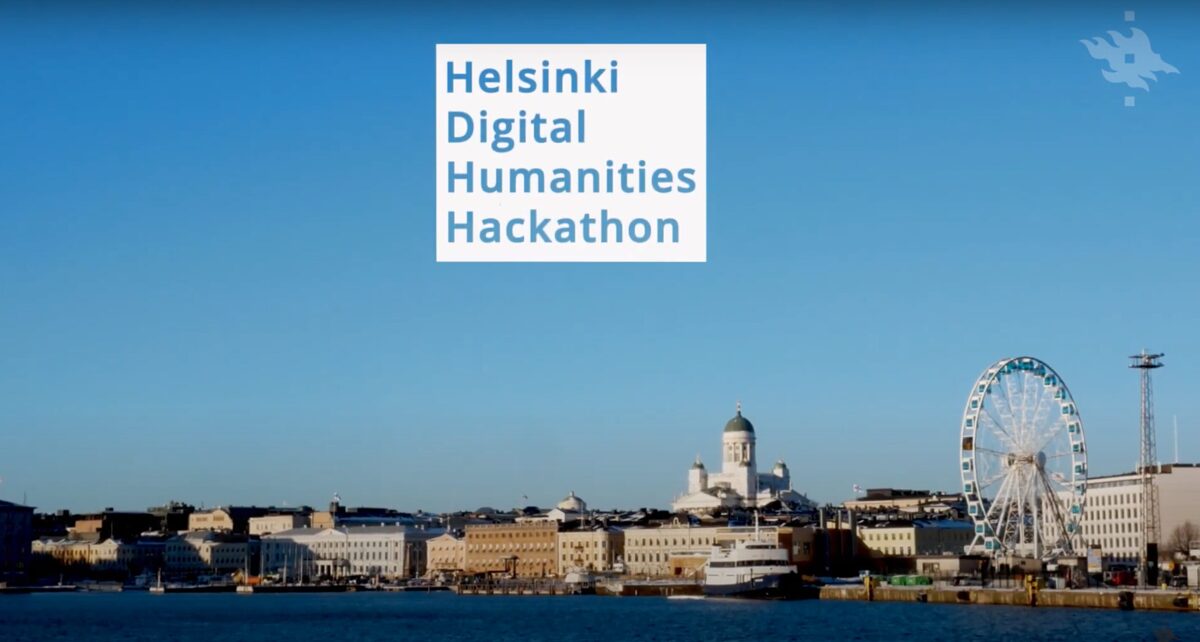
Helsinki Di­gital Hu­man­it­ies Hack­a­thon #DH­H23

May 23, 2023 at 1:16 pm

From May 23 to June 3, a hackathon on digital humanities was held in Helsinki, which was attended by Haralds Matulis, the coordinator of the DHELI project. 

Haralds reports on his experience in Helsinki: "Around 50 people from different countries participated in the hackathon, divided into four research groups. I participated in the 'Interactional Dynamics of Online Discussions' group. The research data came from an 'incel' forum. The aim of the study was to investigate how forum participants communicate, what makes for constructive and non-constructive discussions, what understandings there are of their own group and external groups, what language structures are used to achieve discussion goals. During the study, various methods of digital humanities were tested and applied to internet forum data. Participating in the hackathon gave me the opportunity to test several digital humanities methods in practice and to take part in data processing workflows carried out by research group members - using methods such as sentiment analysis, topic modeling, registry research, corpus linguistics, and working with large data sets."

More information about the hackathon: https://www.helsinki.fi/en/digital-humanities/dhh23-hackathon/dhh23-themes

digitalhumanities.lv 
supported by the project “University of Latvia and Institutes in the European Research Area – Excellence, Activity, Mobility, Capacity” (No. 1.1.1.5/3/25/I/011).